
18th Edition of the NATO CAX Specialist Course

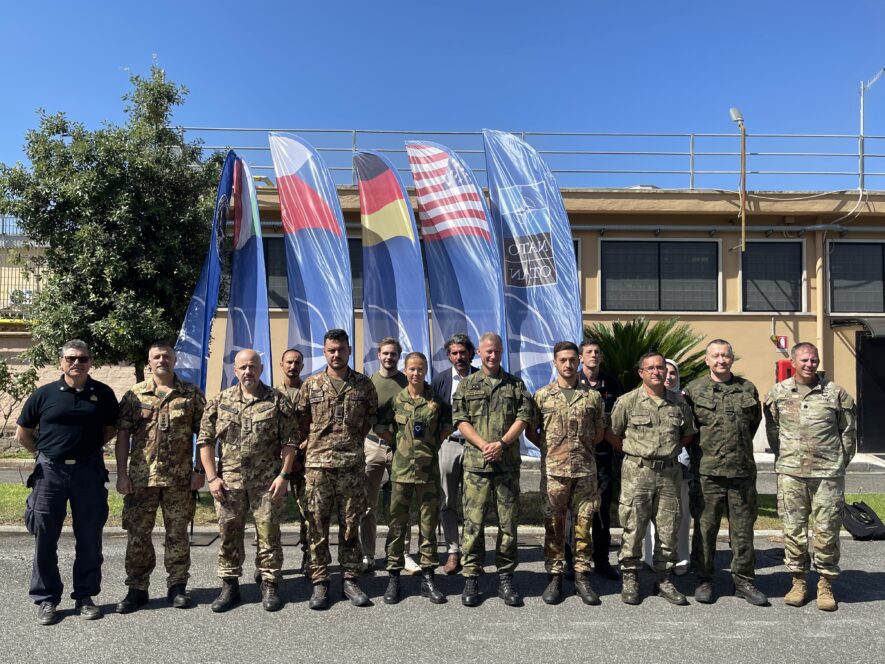
The 18th iteration of the NATO CAX Specialist Course (14–18 July 2025) has just concluded at the NATO Modelling and Simulation Centre of Excellence (M&S COE), once again reaffirming its role as a unique training hub for NATO and partner nations. Fifteen international students, representing various commands, units, and backgrounds, brought diversity, insight, and an outstanding spirit of collaboration to a course that once again proved to be a key reference in NATO’s education and training landscape.
As in the past, this edition was delivered in close collaboration with the NATO Joint Warfare Centre (JWC), FABARIS – S3K Group, and COMVIE — the Italian Army’s Command for Validation and Innovation — whose contributions enriched both the technical content and the real-world relevance of the training.
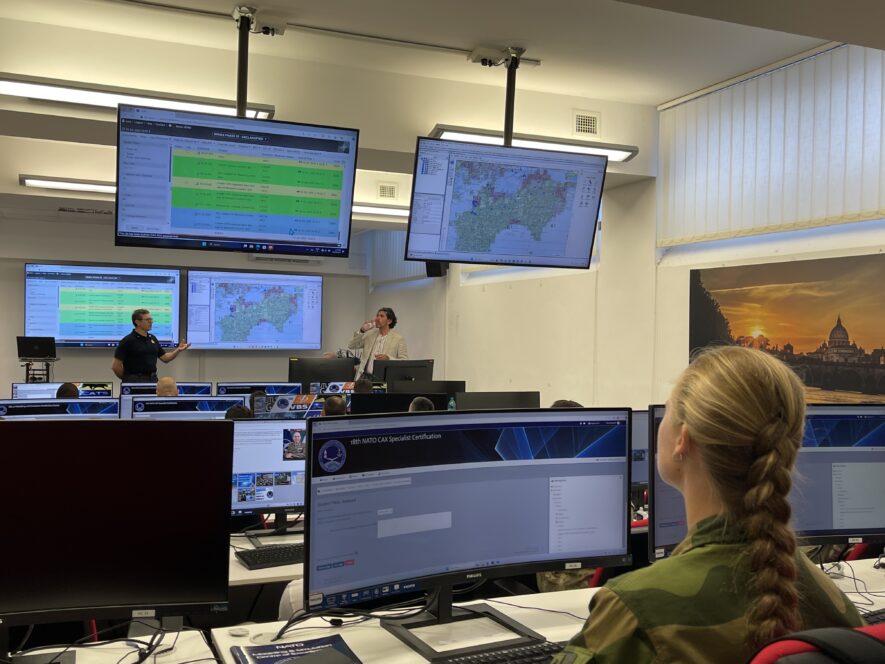
This session was marked by a remarkable interaction between instructors and students. Questions sparked reflections. Concepts were challenged, explored, redefined. Even with a condensed program and intense learning pace, the students displayed adaptability, focus, and sharp thinking. The atmosphere was vibrant — not a classroom, but a command post in motion, echoing with voices, ideas, and the unmistakable energy of people learning not just what to do, but why it matters.
A dedicated MEL/MIL scripting session was introduced as a key module of the course. More than a lecture, it felt like stepping into a real scripting conference. Students had the opportunity to not only engage with scripting procedures but to present and discuss their own scripting logic, just as they would in an operational-level exercise. Several stories and injections were drafted, reviewed, and debated — generating critical conversations and practical insight. The takeaway was clear: this wasn’t training in isolation. This was a live rehearsal of tomorrow’s exercise environment.
The mini-Exercise once again proved to be a powerful teaching tool. With its structured approach and interactive dynamics, it offered students a full simulation of the CAX workflow, from planning to execution. Engagement levels were high, and teamwork was evident. The students didn’t just follow a script — they shaped it. And through that, they sharpened their understanding of command structures, synchronization, and event management.
More than a closing line, this course has written a new page in the CAX community’s shared playbook. The students leave not just with a certificate, but with a renewed sense of purpose — as active contributors to NATO’s training and readiness ecosystem. They have been part of a network, a process, a vision. And they’re ready to bring it home.
The next opportunity to advance on this path will be the JTLS-GO Practitioner Course, planned for October 2025 — a comprehensive and hands-on training dedicated to the Joint Theater Level Simulation. Details and registration information are available at:
https://www.mscoe.org/courses/nato-jtls-go-practioner-course/
Written by Cdr Dino D. Tropea NATO M&S COE
For further details and information, click on:
M&S Courses and Training Activities
+++++++++++++
The NATO Modelling & Simulation Centre of Excellence is dedicated to the promotion of Modelling & Simulation in support of operational requirements, training and interoperability. The Centre act as a catalyst for transformation through the involvement of NATO, governments, academia, industry, operational and training entities, by improving the networking of NATO and nationally owned Modelling & Simulation systems, the cooperation between Nations and organizations through the sharing of Modelling & Simulation information and developments and serving as an international source of expertise for transformation in the related domain. https://www.mscoe.org
NATO Centres of Excellence are nationally or multi-nationally funded institutions accredited by NATO. They train and educate leaders and specialists from NATO member and partner countries, assist in doctrine development, identify lessons learned, improve interoperability and capabilities, and test and validate concepts through experimentation. They offer recognized expertise and experience that is of benefit to the Alliance and support the transformation of NATO, while avoiding the duplication of assets, resources and capabilities already present within the NATO command structure. Although not part of the NATO command structure, they are part of a wider framework supporting NATO Command Arrangements. [source https://www.act.nato.int/centres-of-excellence]
 NATO
NATO